
The MedChemExpress perspective on GLP-1 research highlights its evolution beyond weight loss, with next-generation therapeutics targeting broader metabolic health.
GLP-1 receptor agonists have redefined obesity treatment, but metabolic research is rapidly evolving beyond weight-centric therapy. Coordinating multiple hormonal pathways and improving overall metabolic function are becoming the next frontier in therapeutic development.
In this article, MedChemExpress examines the limitations of GLP-1 mono-agonists, the emergence of multi-receptor agonists, and the expanding applications of incretin-based therapies, highlighting how next-generation strategies are advancing precision metabolic medicine.
Over the past decade, glucagon-like peptide-1 receptor (GLP-1R) agonists have transformed the treatment landscape for obesity and metabolic disease. Once limited to modest and often unsustainable outcomes, pharmacological obesity treatment entered a new era with the advent of incretin-based therapies. Clinical studies of semaglutide and other next-generation GLP-1R agonists demonstrated average body-weight reductions approaching 15-25%, achieving efficacy levels once considered achievable primarily through bariatric intervention[1-3].
The STEP-1 trial marked a defining milestone in this transition. Once-weekly semaglutide 2.4 mg achieved a mean body-weight reduction of 14.9% after 68 weeks of treatment, establishing a new benchmark for pharmacological weight management[3]. More importantly, these therapies fundamentally changed how obesity is viewed, from a lifestyle-related condition to a chronic metabolic disease that can be addressed through targeted biological intervention.
As clinical experience has expanded, however, so too has the scope of metabolic research. The central question is no longer simply how much weight can be lost, but how metabolic health can be improved while preserving physiological function and long-term treatment benefits.
GLP-1 receptor activation closely aligns with these therapeutic objectives. By suppressing appetite, delaying gastric emptying, reducing caloric intake, improving glycemic control, and enhancing satiety through gut–brain communication pathways[1], these therapies produce substantial body-weight reduction while improving insulin sensitivity and overall cardiometabolic health.
Yet the same mechanism that underpin these clinical benefits also reveal the limitations of first-generation incretin therapy. Because weight reduction is driven primarily by reduced energy intake rather than increased energy expenditure, physiological adaptation gradually limits further therapeutic benefit. Resting energy expenditure decreases, appetite signaling begins to recover, and lean tissue becomes increasingly susceptible to loss.
One of the most important insights emerging from recent studies is that weight loss is not synonymous with healthy body composition. In the STEP-1 body composition substudy, approximately 40% of total weight reduction during semaglutide treatment was attributed to lean mass loss[4]. Preserving skeletal muscle and other functional tissues is therefore becoming an increasingly important therapeutic objective alongside fat reduction[5].
These findings are redefining the goals of metabolic therapy. Rather than maximizing weight loss alone, next-generation therapeutic strategies increasingly seek to optimize body composition, preserve metabolic resilience, and coordinate multiple physiological pathways. This conceptual shift provides the biological foundation for the emergence of multi-receptor therapeutics, which are designed to regulate metabolism through coordinated rather than isolated signaling.
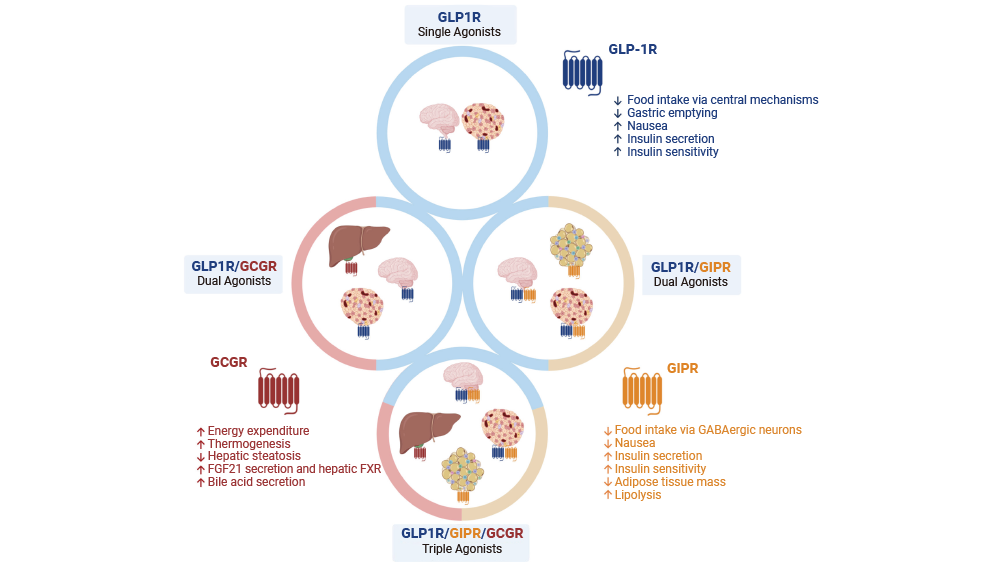
The remarkable success of GLP-1 receptor agonists has also highlighted a fundamental principle of metabolic regulation: no single signaling pathway governs energy homeostasis. Body weight, glucose metabolism, appetite, energy expenditure, and tissue remodeling are regulated through highly interconnected hormonal networks rather than isolated biological pathways.
This systems-level complexity has prompted an important question. Can therapies that simultaneously coordinate multiple metabolic pathways achieve broader and more durable benefits than single-receptor agonists? Increasing evidence suggests that combining complementary hormonal signals may overcome some of the biological limitations observed with first-generation GLP-1 therapies.
Among the hormones attracting renewed attention, glucose-dependent insulinotropic polypeptide (GIP) has emerged as one of the most important partners for GLP-1. Once regarded primarily as a supporting incretin hormone because of its reduced insulinotropic activity in obesity and type 2 diabetes, GIP is now recognized as an integral component of next-generation metabolic therapeutics. When combined with GLP-1 receptor activation, GIP signaling appears to enhance insulin secretion, improve adipose tissue function, and may contribute to better treatment tolerability and greater overall metabolic efficacy[6,7].
Glucagon has undergone a similar reassessment. Historically viewed as an undesirable target because of its hyperglycemic effects, glucagon receptor activation is now appreciated for its ability to increase energy expenditure, promote lipid oxidation, and improve hepatic lipid metabolism[1]. When appropriately balanced with GLP-1–mediated glucose control, glucagon signaling contributes additional metabolic benefits while minimizing unwanted effects.
Rather than functioning independently, these pathways provide complementary physiological actions. GLP-1 primarily suppresses appetite and reduces energy intake, GIP enhances metabolic responsiveness and glucagon increases energy expenditure and substrate utilization. Together, they offer a coordinated strategy for regulating energy balance that extends beyond the capabilities of single-receptor activation.
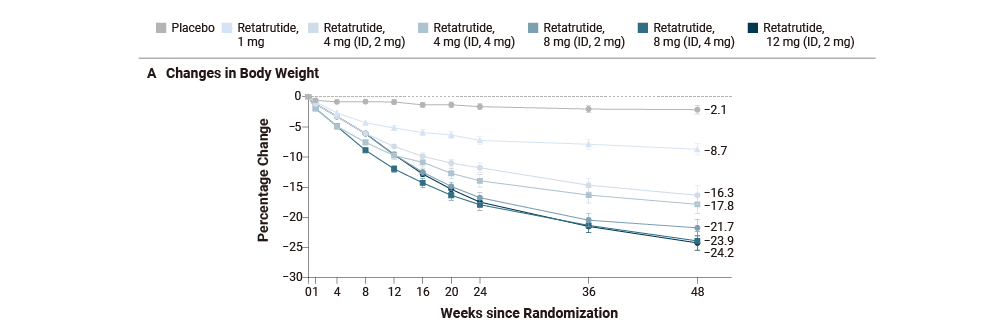
The development of multi-receptor agonists has provided compelling clinical evidence supporting the therapeutic potential of coordinated receptor activation. Retatrutide, a triple agonist targeting GLP-1, GIP, and glucagon receptors simultaneously, represents one of the most advanced examples of coordinated metabolic engineering. By integrating appetite suppression, enhanced insulin action, and increased energy expenditure within a single molecule, retatrutide achieved mean body-weight reductions of up to 24.2% over 48 weeks in a Phase II clinical trial, demonstrating the potential of multi-receptor activation to substantially extend the efficacy of incretin-based therapy[2,9].
Importantly, the success of these next-generation agents reflects more than the addition of multiple receptor activities. Their therapeutic performance depends on carefully balancing receptor potency, signaling bias, pharmacokinetic properties, and tissue-specific responses to optimize efficacy while maintaining tolerability.
Collectively, these advances illustrate a broader transition from receptor-specific pharmacology toward systems-level metabolic engineering. Rather than maximizing a single signaling pathway, next-generation metabolic therapeutics are increasingly designed to coordinate complementary biological networks to achieve more comprehensive and durable metabolic benefits.
The evolution of incretin biology is extending the therapeutic potential of metabolic medicines far beyond body obesity. As understanding of the systemic effects of GLP-1 signaling continues to deepen, incretin-based therapies are increasingly being investigated across a broad spectrum of metabolic, cardiovascular, neurological, and inflammatory diseases. Rather than acting solely as weight-loss agents, these therapies are emerging as modulators of whole-body metabolic physiology[11].
Among the most rapidly advancing areas is metabolic dysfunction-associated steatohepatitis (MASH). Through coordinated effects on body weight, insulin resistance, hepatic lipid metabolism, and chronic inflammation, GLP-1-based therapies have demonstrated encouraging potential for reducing liver fat accumulation and improving histological features of liver disease. These findings suggest that the benefits of incretin-based therapies extend beyond appetite regulation to broader improvements in metabolic function and tissue homeostasis.
The biological influence of incretin signaling also extends to the central nervous system. GLP-1 receptors are widely distributed throughout brain regions involved in appetite regulation, reward processing, cognition, and neuroprotection. Growing evidence suggests that GLP-1-based therapies may influence feeding behavior through modulation of reward circuitry while simultaneously demonstrating therapeutic potential in neurodegenerative disorders, including Alzheimer’s disease and Parkinson’s disease. Although many of these applications remain under active investigation, they illustrate the expanding physiological scope of incretin biology[11].
Beyond current incretin-based therapies, metabolic drug discovery is increasingly exploring complementary hormonal pathways that regulate energy balance and and tissue-specific metabolism. Targets including amylin, FGF21, peptide YY (PYY), and thyroid hormone receptor β (THRβ) are being actively investigated as potential partners for future combination or multi-receptor strategies. At the same time, advances in peptide engineering, receptor signaling optimization, and tissue-selective pharmacology are enabling increasingly sophisticated approaches to metabolic regulation[6].
Rather than maximizing weight reduction alone, future metabolic therapeutics are expected to integrate multiple physiological pathways to improve body composition, preserve metabolic resilience, and deliver organ-specific benefits. Collectively, these advances reflect a broader transition from weight-centric therapy toward precision metabolic medicine, in which coordinated regulation of interconnected biological systems may ultimately redefine the treatment of metabolic disease.
GLP-1 receptor agonists have fundamentally reshaped the treatment of obesity, demonstrating how targeted modulation of incretin signaling can achieve meaningful and sustained metabolic benefits. Yet the evolution of the field also reflects a broader shift in therapeutic thinking, from pursuing greater weight loss alone to improving the overall quality of metabolic health.
The next generation of metabolic therapeutics is increasingly built on coordinated receptor biology, multi-pathway regulation, and precision intervention across interconnected physiological systems. As incretin biology continues to expand beyond obesity, these advances are expected to redefine the future of metabolic medicine and create new opportunities for the treatment of a wide range of metabolic disorders.
| Catalog Number # | Product Name | Description |
| HY-114118 | Semaglutide | Semaglutide is a long-acting, selective, competitive GLP-1R agonist that can penetrate the blood-brain barrier. |
| HY-P3506 | Retatrutide | Retatrutide (LY3437943) is a triple agonist peptide of the glucagon receptor (GCGR), glucosedependent insulinotropic polypeptide receptor (GIPR), and glucagon-like peptide-1 receptor (GLP-1R). |
| HY-P0014 | Liraglutide | Liraglutide is a glucagon-like peptide-1 (GLP-1) receptor agonist used clinically to treat type 2 diabetes mellitus. |
| HY-P3366 | Ecnoglutide | Ecnoglutide (XW003) is a long-acting, cAMP-biased glucagon-like peptide 1 (GLP-1) receptor agonist. Ecnoglutide can be used for research of T2DM and obesity. |
Note: We can provide MCE products for research use only. We do not sell to patients.
MedChemExpress GLP-1, incretin and metabolic research compounds are available through the Bio-Connect Webshop. Contact our team for support in selecting compatible research tools for your obesity, diabetes, MASH or precision metabolic medicine workflow.



Inhibitors | Agonists | Recombinant Proteins | Dyes | Assay Kits | Compound Libraries | Drug Screening | PCR | Cell Culture Reagents | Custom Synthesis, Screening, ADC, PROTAC Solutions
We gladly support you by keeping you updated on our latest products and developments