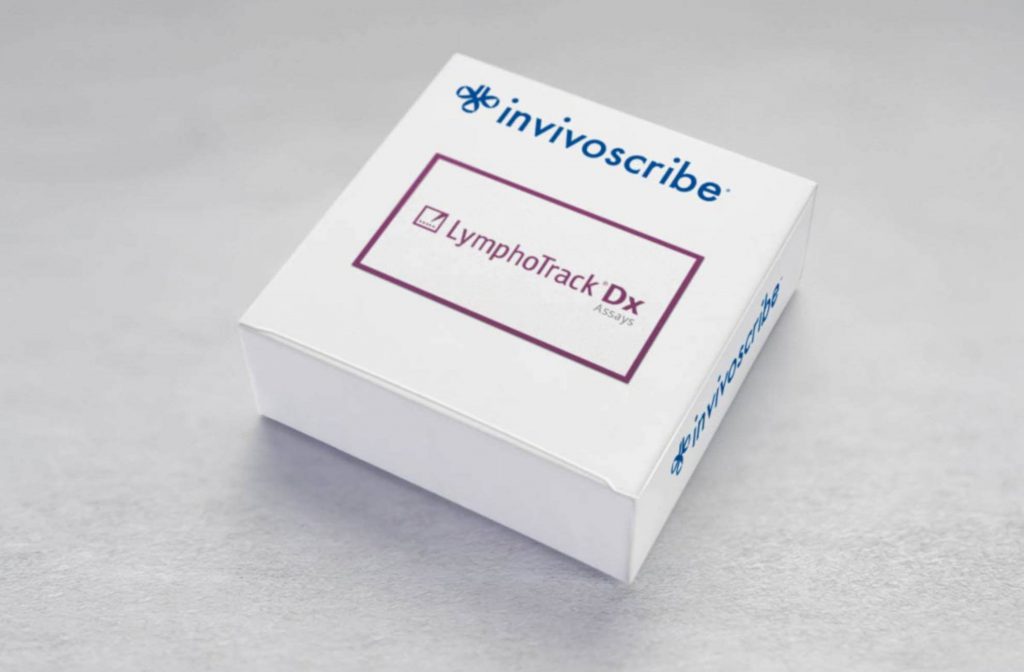
Invivoscribe develops and manufactures sensitive, NGS-based solutions for MRD testing in both lymphoid and myeloid malignancies. Their portfolio is built around standardized workflows and objective analysis, making it well suited for disease monitoring in longitudinal research settings.
Measurable residual disease, or MRD, refers to the low numbers of malignant cells that can persist in the body during or after treatment, even when conventional assessments indicate remission. These remaining cells carry the risk of driving disease recurrence and are now widely regarded as a meaningful biomarker in hematologic malignancies.
As targeted therapies and immunotherapies continue to evolve, there is a growing need for MRD tests that combine high sensitivity with reproducibility, so that treatment response and disease burden can be reliably evaluated over time.
Leukemic cells that survive initial treatment in the bone marrow are among the primary drivers of relapse and can serve as an early signal of how well a treatment strategy is working. While newer treatment approaches have improved clinical response rates and overall survival considerably, the reality is that a significant proportion of patients will still experience relapse. This underscores the importance of having reliable MRD testing available.
Detecting disease progression or recurrence at an early stage typically gives patients the best chance of successful intervention. Research has shown that the amount of residual disease detected in bone marrow or peripheral blood correlates with the likelihood of relapse. Achieving MRD negativity has been associated with better clinical outcomes and appears to be a stronger predictor of overall survival (OS) than achieving complete response (CR) alone. In time, standardized NGS-based MRD testing may help distinguish patients who are likely to relapse from those who may be cured.
Reference:
Faham M, et al. Blood. 2012;120(26):5173-5180.
After initial induction therapy, consistent monitoring of disease burden is essential. NCCN guidelines indicate that MRD testing can be used to evaluate treatment effectiveness and to watch for the return of malignant mutations during remission. Tracking multiple clonotype sequences also helps identify refractory disease.
Beyond patient monitoring, MRD testing is gaining recognition as a potential surrogate endpoint in clinical trials. Because it can offer a standardized and reproducible measure of response, it has the ability to shorten trial timelines and support faster drug approvals.
Historically, MRD has been assessed using allele-specific oligonucleotide PCR (ASO-PCR) and flow cytometry. While these techniques have been widely adopted, they come with practical limitations: restricted sensitivity, difficulty in standardizing protocols across labs, a degree of subjectivity in interpretation, and a steep learning curve for consistent results.
Next-generation sequencing (NGS) offers an alternative that addresses many of these challenges. NGS-based MRD testing provides thorough clonal characterisation and disease assessment, and has been shown to match or outperform flow cytometry in several comparative studies. The technology is well suited for standardization, which is a practical advantage for lab throughput and turnaround time.
References:
Medina A, et al. Blood. 2017;130(17):1783-1801.
Arcila ME, et al. Blood. 2017;130(Supplement 1):4017.
Invivoscribe provides both in-house kits and laboratory-based MRD testing services for lymphoid and myeloid malignancies. Their assay kits and bioinformatics software support the detection of IGH, IGK, TRG, TRB, FLT3 ITD and NPM1 gene targets, enabling researchers to identify and follow mutation evolution over time in their own facilities. NGS-based MRD testing through Invivoscribe combines sensitivity, specificity and objectivity, allowing residual disease to be monitored throughout the full course of a study.
Lymphoid malignancies rank among the most common cancer types and include non-Hodgkin lymphoma, Hodgkin lymphoma, myeloma and lymphocytic leukemia. These diseases arise from the malignant transformation of lymphocytes at different stages of their development. Because lymphoid neoplasms can spread beyond the local tissue via lymph nodes and lymphatic vessels, they are typically considered malignant from the outset and carry a risk of systemic dissemination.
LymphoTrack® assays enable visualization of immunoglobulin (Ig) and T-cell receptor (TCR) gene rearrangements while supporting somatic hypermutation analysis through a simplified workflow. The assays follow a simplified workflow, which makes it practical for labs to implement standardized NGS-based clonality and MRD testing.
The LymphoTrack® MRD bundled solution brings together assay reagents, internal controls, low positive controls and bioinformatics software. Together, these components support the accurate identification and longitudinal tracking of clonal rearrangements, including the detection of newly emerging sub-clones.
| Catalog number | Product Name |
| 75000008 | LymphoTrack MRD Software |
| 40880098 | LymphoTrack B-cell Low Positive Control |
| 40880118 | LymphoQuant B-cell Internal Control |
| 40880108 | LymphoTrack T-cell Low Positive Control |
| 40880128 | LymphoQuant T-cell Internal Control |
References:
Shaffer AL, et al. Nat Rev Immunol. 2002;2:920-933.
Longo, DL. Harrison’s Hematology and Oncology, 3rd Ed, McGraw-Hill Education. 2016.
Alaggio R, et al. Leukemia. 2022;36:1720-1748.
The group of myeloid malignancies encompasses myelodysplastic syndromes (MDS), myeloproliferative neoplasms (MPN), MDS/MPN overlap syndromes, and acute myeloid leukemia (AML). AML is a heterogeneous, fast-progressing disease in which immature blood cells in the bone marrow proliferate uncontrollably and fail to differentiate properly, leading to a decline in functional red and white blood cells. Despite representing roughly 1% of new cancer diagnoses, AML carries a five-year relative survival rate of only 31.9%.
The LeukoStrat® FLT3-ITD MRD Assay is an NGS-based solution for identifying and monitoring FLT3 internal tandem duplications. It comes with integrated software that simplifies downstream analysis and reporting.
The LeukoStrat® NPM1 MRD Assay uses NGS to detect NPM1 mutations at high sensitivity and enables longitudinal tracking through standardized bioinformatics analysis. The assay provides rapid, reproducible results.
References:
Dohner et al. NEJM. 2015;373:1136-52.
Maeda Y. Int J Hematol. 2024;119(4):347-373.
https://seer.cancer.gov/statfacts/html/amyl.html Accessed 08 July 2024
Invivoscribe’s NGS-based MRD assays and controls are available in the Benelux through Bio-Connect. If you are interested in integrating these solutions into your research workflows, please contact your Bio-Connect account manager or reach out to us via our contact page for more information on products, pricing, and local support.
Disclaimer: These products are for Research Use Only (RUO) and are not intended for diagnostic procedures.



PCR | B- & T-cell clonality assays (IGH, IGK, TRG, TRB) | Chromosome Translocations | CDx FLT3 Mutation Assay | NGS Gene Panels | MRD clonality solutions | Molecular Biology | Services for Oncology Testing
We gladly support you by keeping you updated on our latest products and developments