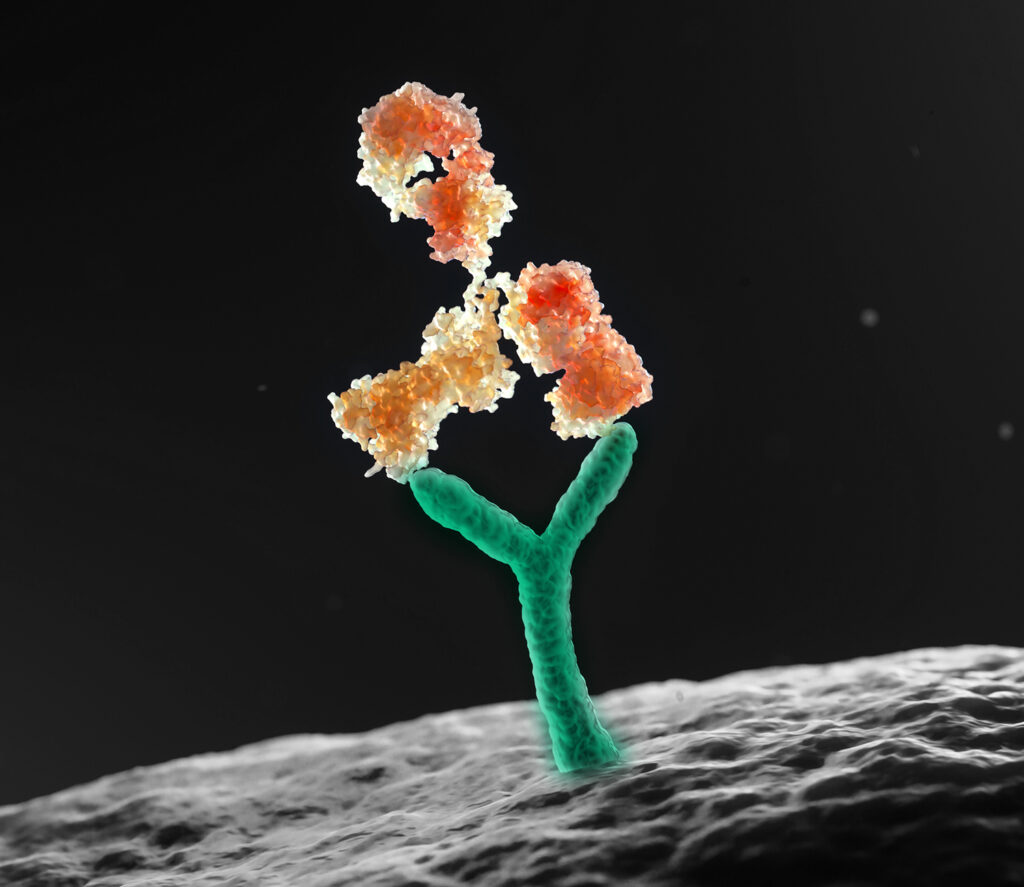
Validated for flow cytometry, BPS Bioscience’s conjugated antibodies offer a simple workflow and superior consistency. Site-specific labeling preserves antigen binding and ensures homogeneity.
Designing a successful flow cytometry experiment requires effort on multiple fronts, including selecting the right antibodies for the experiment. The antibody selection process, often referred to as “building an antibody panel,” is the pre-experimental step researchers spend the most time on. Here we provide pointers for choosing between conjugated and unconjugated antibodies for flow cytometry experiments.
Before you start:
When it comes to selecting antibodies, researchers can choose between conjugated antibodies and unconjugated antibodies depending on their needs. Below, we discuss when it makes the most sense to choose one against the other.
Conjugated flow cytometry antibodies are primary antibodies that have a fluorochrome, like fluorescein (FITC), phycoerythrin (PE), or allophycocyanin (APC), directly coupled to the antibody. Unconjugated antibodies on the other hand do not have a linked fluorochrome.
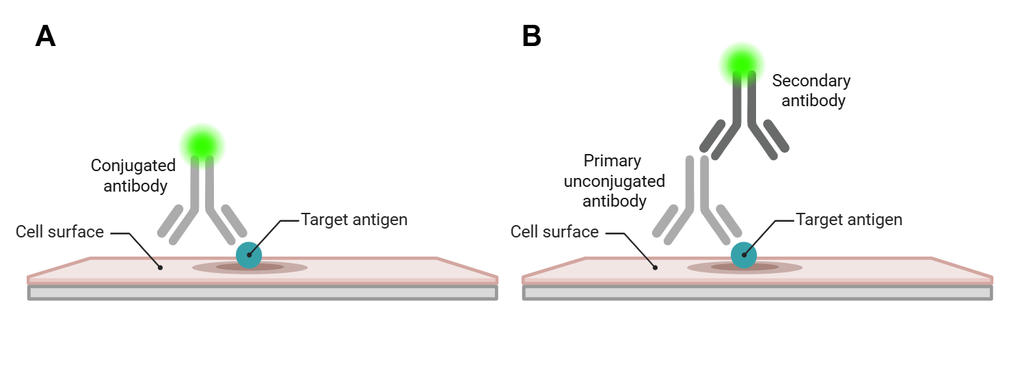
If you choose to use unconjugated antibodies in your flow cytometry experiment, you will have to perform a secondary staining with an antibody that recognizes the primary and carries the fluorochrome, which increases the number of steps in your protocol compared to conjugated antibodies. However, unconjugated antibodies can be used across multiple types of experiments more easily than a conjugated antibody, adding flexibility.
Additionally, a scientist who wants to conjugate their antibodies with specific fluorochromes that are not available commercially can do so with unconjugated antibodies, allowing for more customization. Secondary staining is also known to amplify signals and can help with sensitivity if the target is expressed at low levels. On the other hand, they may also produce higher background signals.
Advantages of unconjugated antibodies for flow cytometry
Conjugated antibodies enable simple one-step staining of the cells you’re studying. This means using conjugated antibodies offers a simpler, faster workflow compared to unconjugated antibodies. They also lead to lower background signals compared to primary/secondary antibody combinations. They may cost less than having to purchase primary plus secondary antibodies. Conjugated antibodies are also useful for complex, multi-color panels allowing researchers to perform their experiments without cross-reactivity between secondary antibodies. In addition, if the sample you’re analyzing is precious because perhaps the cell population is difficult to obtain, using conjugated antibodies in a shorter staining workflow helps you avoid multiple wash steps, and preserves the sample.
In summary, conjugated antibodies are preferred when the goal is rapid, reproducible, multiparameter flow cytometry with limited or valuable samples, whereas unconjugated antibodies are preferred when maximum sensitivity through signal amplification or greater experimental flexibility is required.
Advantages of conjugated antibodies for flow cytometry:
BPS Bioscience offers recombinant, conjugated antibodies for your flow cytometry studies. Their FluoSite antibodies are tagged with fluorochromes using a method that is highly site-specific. The process ensures that the labeling site is far from the antigen-binding domain to preserve antibody functionality. The precise labeling strategy ensures the antibodies are useful for sensitive flow cytometry experiments. It also ensures homogeneity of the antibody preparation, lot-to-lot consistency, and experimental reproducibility.
BPS Biosciences FluoSite antibodies:
We currently offer BPS Bioscience’s PE, FITC, and APC-labeled antibodies that bind to popular targets such as PSMA, KLK2, STEAP1, GPRC5D, CD19, CD20, CD4, CD8, EGFR, Claudin-18.2, and many more, as well as isotype controls.
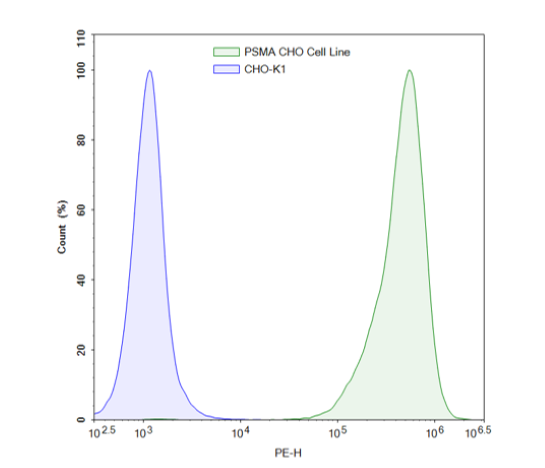
Choosing the right antibodies can take time, especially when you are working with complex panels or valuable samples. Our colleagues are happy to think along with you and help you find the BPS Bioscience FluoSite™ antibodies that fit your flow cytometry experiment. Contact our team for personal advice or product availability.


Proteins & enzymes | Antibodies | Lentiviruses | Cell Lines | Biochemical and Cellular Assay Kits
We gladly support you by keeping you updated on our latest products and developments