PTM BIO introduces pyruvylation research tools for studying how glycolysis-driven lysine pyruvylation links metabolism to immunity, cancer and epigenetic regulation.
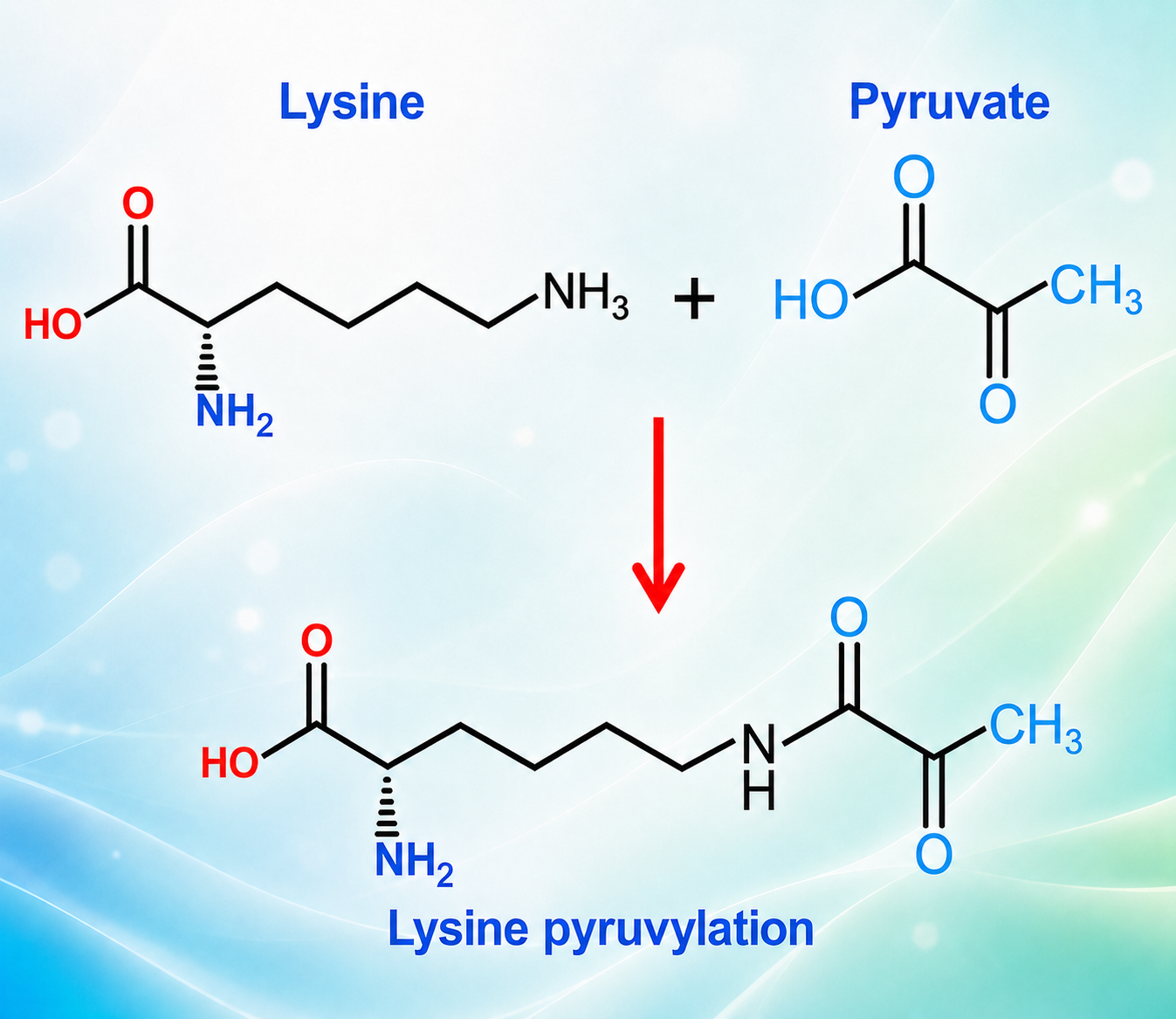
Pyruvate is usually introduced as the endpoint of glycolysis: a three-carbon metabolite that is either transported into mitochondria, converted into lactate, or redirected into biosynthetic pathways. Two studies published in 2026 now add a new role. Pyruvate can covalently modify lysine residues to form lysine pyruvylation (Kpy), creating a direct molecular route from glycolytic flux to protein regulation.
The first functional example came from STAT1. Zuo and colleagues showed that high glucose and PKM2-dependent glycolysis increase pyruvate availability and promote STAT1 pyruvylation at Lys201. This modification prevents efficient STAT1-STAT2 complex formation, weakens type I interferon signaling and reduces antiviral activity.
Key references:
Song and colleagues then established Kpy as a widespread PTM. Using biochemical validation and proteomics, they identified 88 Kpy sites in mammalian cells and detected the modification from bacteria and yeast to mouse and human cells. SIRT3 functions as a major Kpy “eraser,” whereas HAT1 and p300 catalyze Kpy formation using pyruvyl-CoA.
Kpy rose with pyruvate supplementation, increased glucose availability, hypoxia, respiratory-chain inhibition and LDH inhibition. CUT&Tag showed that promoter Kpy intensity increased with gene expression. Together, these observations suggested that glycolytic flux can be translated into transcriptional regulation through histone pyruvylation.
Key references:
Tumors frequently increase glycolytic flux and alter the balance between cytosolic pyruvate, lactate production and mitochondrial oxidation. The Nature Metabolism study found higher Kpy signals in esophageal squamous-cell carcinoma than in matched adjacent tissues and showed that EGF stimulation increased Kpy. A priority is therefore to map the Kpy proteome and chromatin landscape across tumor types and disease stages. Studies of the mitochondrial pyruvate carrier, including a 2025 study identifying ALDH4A1 as an active component of the MPC (mitochondrial pyruvate carrier) complex, also suggest that pyruvate routing may influence whether Kpy accumulates. This raises testable questions about tumor growth, metabolic adaptation, drug resistance and response to therapies targeting EGFR, glycolysis or mitochondrial pyruvate import.
Glycolysis does more than fuel immune cells; it also shapes differentiation. A 2024 Nature Immunology study showed that deleting PKM2 (pyruvate kinase muscle 2) redirected glucose metabolism and generated TCF1-positive progenitor CD8 T cells with improved responsiveness to PD-1 blockade. Kpy may be one of the molecular mechanisms that converts glycolytic state into durable immune-cell behavior. Profiling Kpy in exhausted T cells, NK cells, macrophages and dendritic cells could reveal whether specific histone or non-histone Kpy sites regulate antitumor immunity.
Key references:
Pyruvate metabolism is profoundly altered in cardiometabolic disease, making diabetes and its complications an important area for future Kpy research. In the recent Cell study, individuals with high blood glucose showed significantly elevated serum and intracellular pyruvate levels, accompanied by increased STAT1-K201 pyruvylation, providing direct evidence that hyperglycemia can create a metabolic environment favorable for Kpy formation.
Beyond hyperglycemia itself, disturbances in pyruvate handling are increasingly recognized in diabetic complications and cardiovascular disease. In human heart failure with preserved ejection fraction (HFpEF), a condition strongly associated with obesity and diabetes, myocardial metabolomics revealed increased pyruvate together with reduced expression of the mitochondrial pyruvate carrier MPC1, suggesting a mismatch between pyruvate production and mitochondrial utilization. Pyruvate metabolism is also altered in diabetic kidney disease, although recent human data indicate that these changes depend on sex and DKD status rather than representing a universal increase in circulating pyruvate.
These observations raise an important unanswered question: could altered pyruvate pools in diabetes, diabetic cardiomyopathy, kidney disease or heart failure be translated into disease-relevant changes in protein pyruvylation? Future studies profiling Kpy across metabolic tissues may reveal whether this newly identified modification acts as a molecular link between chronic metabolic stress and downstream changes in gene regulation, mitochondrial function and tissue remodeling.
Key references:
Hypoxia increased both intracellular pyruvate and histone Kpy in the Nature Metabolism study. Because glycolytic reprogramming is a central feature of ischemia, wound repair and adaptation to low oxygen, Kpy may function as a metabolic memory of hypoxic exposure. Recent work has shown that accelerating cellular adaptation can protect liver cells and cardiomyocytes from ischemia-like or hypoxic stress. Determining whether Kpy is protective, maladaptive or context-dependent could open a new layer of research in cardiovascular, neurological and tissue-injury models.
Key references:
Pyruvate routing influences stem-cell maintenance and therapy persistence. Patient-derived chronic myeloid leukemia stem cells, for example, show increased pyruvate anaplerosis that remains after kinase inhibition. It will be important to test whether histone Kpy at active promoters helps sustain stemness programs, and whether non-histone Kpy alters enzymes or signaling proteins that support metabolic plasticity.
Key references:
PTM BIO provides a pan-specific lysine pyruvylation (Kpy) antibody, together with customized pyruvylation antibody development services. These services include immunogen design and synthesis, immunization, antibody purification and validation, supporting the development of highly specific antibodies for PTM research. Notably, both research articles on pyruvylation published to date used PTM BIO products or services: the Nature Metabolism study acknowledged PTM BIO for generating the pan-specific anti-Kpy antibody, while the Cell study used a PTM BIO STAT1-K201 pyruvylation-specific antibody.
As pyruvylation emerges as a new link between glycolytic metabolism and protein regulation, these antibodies and custom antibody development services offer researchers a valuable starting point for studying the biological and disease-related functions of this newly discovered modification.
PTM BIO’s pyruvylation antibodies and custom antibody development services are available in the Benelux through Bio-Connect. To discuss availability, pricing or a custom antibody development request, please contact your Bio-Connect account manager or reach out via our contact page.


Proteomics | Bioinformatics | Drug R&D | Research Antibodies | IVD
We gladly support you by keeping you updated on our latest products and developments