BioVendor introduces a new laboratory tool for bacterial endotoxin detection using recombinant Factor C (rFC), replacing traditional LAL testing. No false positives from β-glucans, with high assay sensitivity.
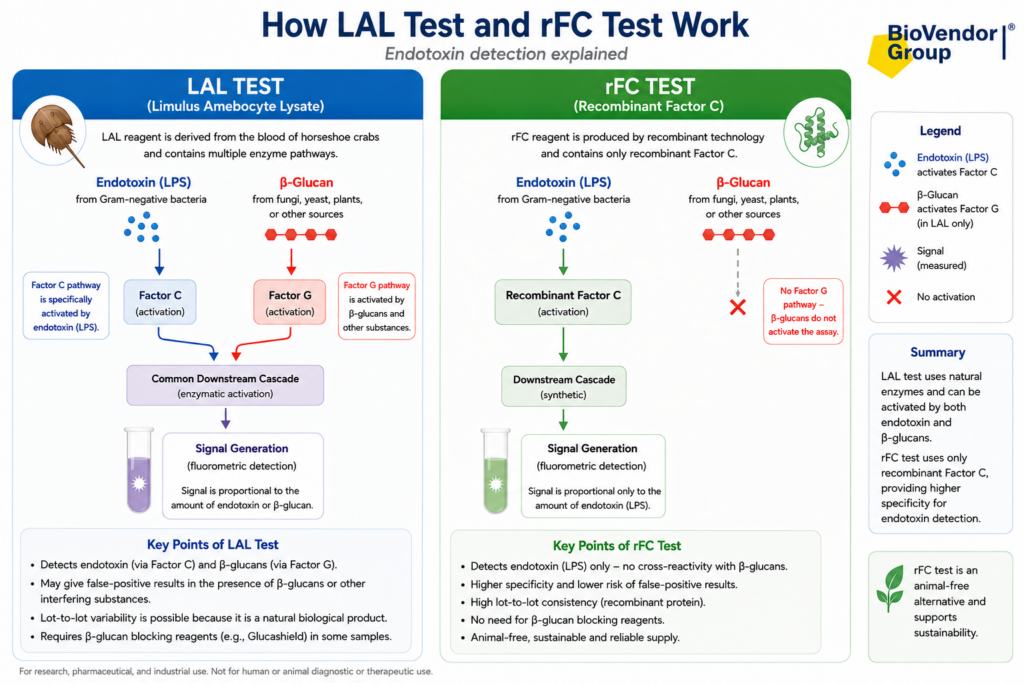
For decades, the Limulus Amebocyte Lysate (LAL) assay has been the industry standard for endotoxin detection. While widely accepted, LAL testing has several inherent limitations. Recombinant Factor C (rFC) technology addresses these challenges by providing a more specific, consistent, and sustainable solution that also aligns with evolving regulatory expectations.
β-Glucan Interference
Traditional LAL reagents contain both Factor C and Factor G. While Factor C specifically detects endotoxin (LPS), Factor G is activated by β-glucans found in fungi, yeast, cellulose filters, and certain biological materials. This can lead to false-positive results or require the use of β-glucan blocking reagents.
Biological Variability
LAL reagents are manufactured from horseshoe crab blood, making them natural biological products that may exhibit lot-to-lot variability and require additional validation when reagent lots change. These limitations have driven the adoption of recombinant, animal-free alternatives that offer greater consistency and a more reliable supply.
Recombinant Factor C (rFC) technology eliminates these limitations by using a highly purified recombinant protein that specifically recognizes endotoxin. The result is BioVendor’s robust, highly specific, and sustainable solution for endotoxin detection in research and quality control laboratories. Pharmacopoeias and regulatory authorities, including the European Pharmacopoeia (Ph. Eur.) and the United States Pharmacopeia (USP), increasingly recognize recombinant Factor C (rFC) as a reliable and validated alternative to traditional LAL-based endotoxin testing. An increasing number of production facilities are transitioning from traditional LAL assays to rFC-based endotoxin testing.
The BioVendor test assay is intended as a cost-effective, equivalent alternative to the LAL test, eliminating the need for inhibitors while delivering performance comparable to other endotoxin detection assays. The assay is widely used in biotechnology research and pharmaceutical manufacturing for in-process control and final product release, helping to ensure product quality and patient safety.
| Product Name | Catalog No. | Size | Regulatory Status |
| Recombinant Factor C Endotoxin Detection Kit | RZA001R | 96 wells | RUO |
Assay formate: 96-well, quantitative, two-point end-point fluorescence assay
Working pH range: pH 6 – 8
High assay precision with low intra- and inter-assay CVs
High sensitivity assay
Detection: excitation/emission wavelength of 380/440nm
Quantitative calibration range: 0,005 – 5 EU/ml
No false positive results
A validation procedure applicable to various sample matrices
Cost-effective alternative without compromising product quality
Size: 96 tests / package
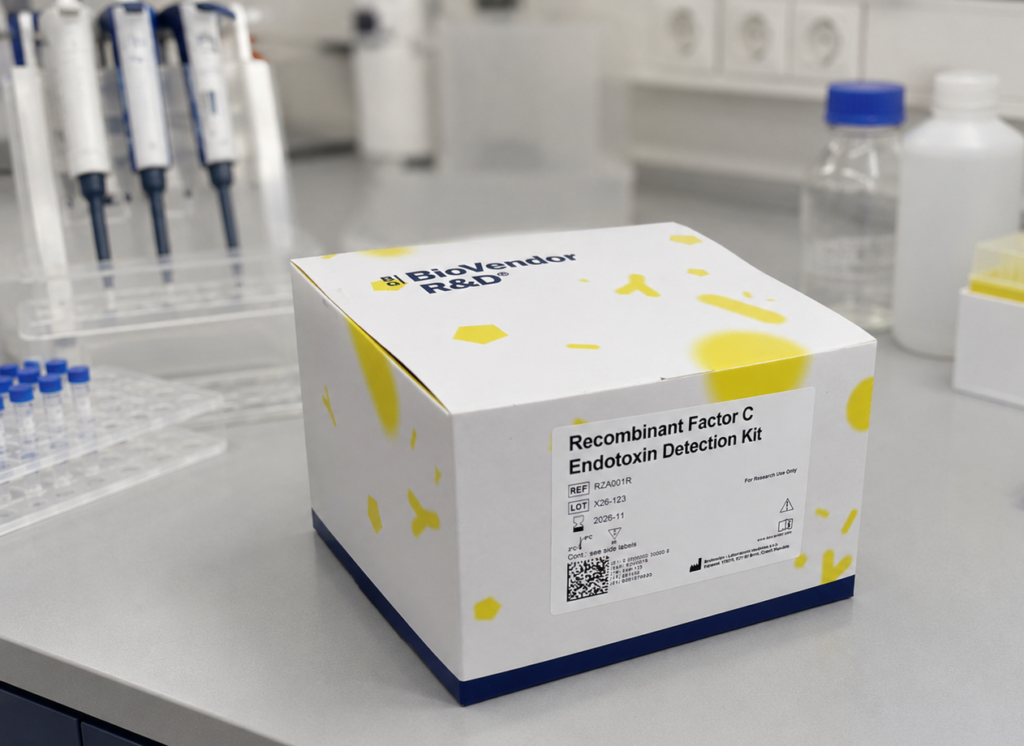
BioVendor’s Recombinant Factor C Endotoxin Detection Kit can help your laboratory move beyond traditional LAL testing with a specific, consistent and animal-free approach to endotoxin detection. With high sensitivity, no β-glucan interference and a cost-effective 96-well format, this rFC assay is designed to support reliable results in research, biotechnology and pharmaceutical quality control.
Contact Bio-Connect or your account manager to learn how this modern alternative can fit into your endotoxin testing workflow.



ELISA | Proteins | Antibodies | IVD | endotoxin testing | POCT CE/IVD
We gladly support you by keeping you updated on our latest products and developments