Peptide purity can make or break an assay. TAG Copenhagen explains how matching purity to your application limits prevents costly experimental artifacts and ensures research reproducibility.
Quality in the lab starts with a stark reality: the purity percentage listed on a Certificate of Analysis (CoA) is not just a regulatory compliance metric. It directly dictates whether your assay will yield clear, publishable data or leave your team stranded in weeks of frustrating troubleshooting.
In molecular biology, treating peptide purity as a generic “one-size-fits-all” specification introduces uncontrolled variables. To build reproducible workflows, researchers must understand exactly what they are paying for and what contaminants they might accidentally be introducing to their biological systems.
When a custom peptide batch is labeled as 85% pure, the remaining 15% isn’t harmless water. It consists of specific chemical byproducts generated during Solid-Phase Peptide Synthesis (SPPS). Inadvertently introducing these “villains” into your culture media or assay wells can heavily skew data:
To eliminate these artifacts, all TAG Copenhagen custom peptides are purified using Reversed-Phase High-Performance Liquid Chromatography (RP-HPLC). By separating tightly related synthesis byproducts based on hydrophobicity, RP-HPLC delivers the exact, high-purity fractions required to ensure consistent performance in demanding applications.
This level of separation is a careful balance between an application’s biological sensitivity and the lab’s budget. While crude peptides are cost-effective for initial high-throughput screenings or simple antigen mapping, upgrading to 95% or 98% purity via RP-HPLC becomes the deciding factor for success as research moves into functional assays, NMR studies, or crystallography.
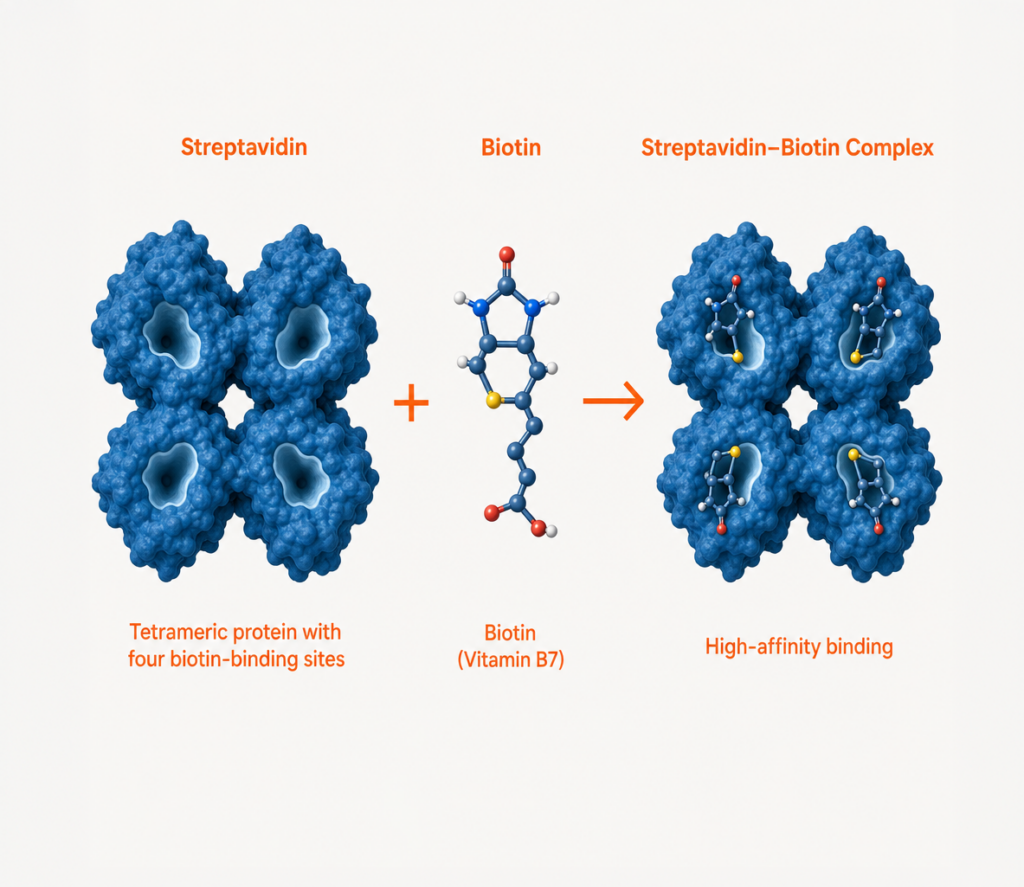
This precision is even more critical when working with complex modified peptides. Modern research rarely relies on simple, linear amino acid chains. Whether a project requires phosphorylation for mapping cell signaling and kinase activity, biotinylation for high-affinity pull-down assays, or fluorescent tagging (such as FITC or FAM) for live-cell imaging and localization, the presence of contaminants can ruin the experiment. Without rigorous RP-HPLC purification, minor impurities or incomplete conjugation can interfere with molecular folding, create severe background noise, or alter binding kinetics, making it virtually impossible to separate true biological signaling from artifactual data.
Ultimately, maintaining a consistent research timeline depends entirely on a reliable supply of high-quality reagents. A delayed custom peptide delivery or a batch that fails to perform does more than just stall an experiment; it actively threatens grant deadlines and publication targets.
With TAG Copenhagen’s custom peptide services, researchers can tailor sequences, functional modifications, purity levels and synthesis scales to their application, from assay development to cancer research.
Need help finding the right specifications for your next peptide project? Contact your Bio-Connect account manager or our technical support team to discuss your application, required purity, modifications and quantities. Let’s find the right custom peptide solution for your research and get your quotation started.


Custom Peptides | Peptide Synthesis | Modified Peptides | Peptide Purity & Scale | Research Peptides
We gladly support you by keeping you updated on our latest products and developments