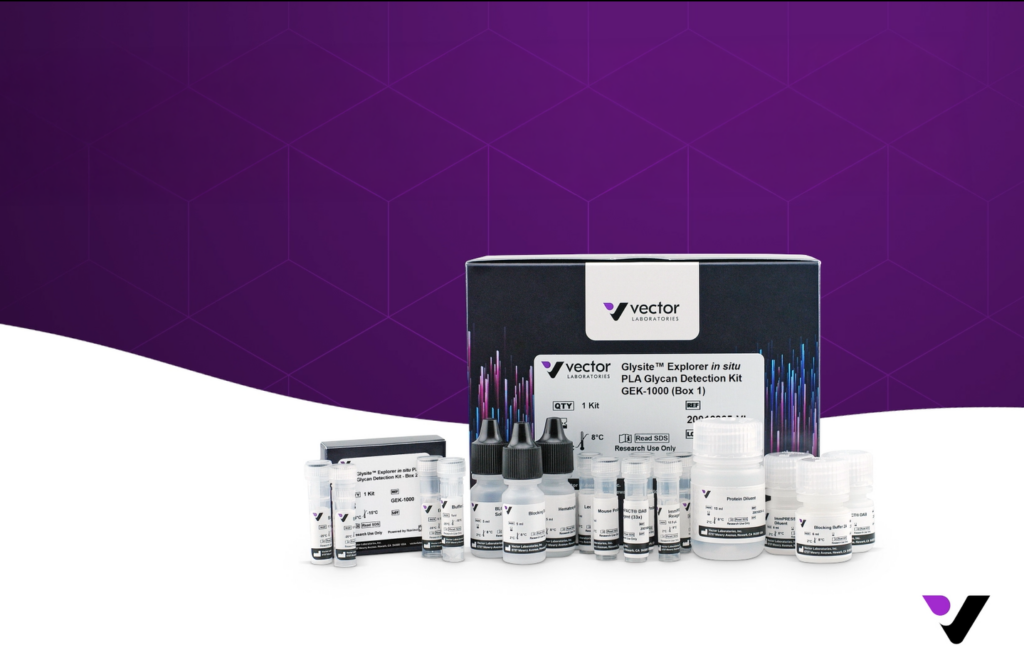
Vector Laboratories tools for multiplex IHC, IF, and glycan detection help immuno-oncology researchers get more from each tumor section, from immune cell phenotypes to sialic acid signaling.
Immuno-oncology research makes specific demands of immunohistochemistry (IHC) and immunofluorescence (IF). Patient biopsies and archived tumor samples are limited and often irreplaceable, so researchers need several layers of biology from each section, from immune cell phenotypes to the spatial relationships between immune and tumor cells. Immuno-oncology studies also require investigation of understudied mechanisms such as glycosylation, which can shape how tumors interact with the immune system. Vector Laboratories offers reagents that address each of these needs, including multiplex staining, signal preservation, and glycan detection.
Sequential staining provides researchers with additional information from the same tissue sections, but each round requires consideration. Secondary antibodies in later rounds can detect antibodies left from earlier ones, limiting how often a host species can appear in one panel and complicating panel design. Many automated platforms strip antibodies between rounds with heat-induced epitope retrieval (HIER), which can erode morphology and antigenicity over repeated cycles.
The VectaPlex™ Antibody Removal Kit from Vector Laboratories gently strips non-covalently bound antibodies and detection reagents between rounds, with less impact on antigenicity than HIER. Preserved antigenicity ensures consistent results across rounds and allows you to titrate an antibody once and apply it in any cycle position, reducing order-dependent optimization. Additionally, because each round is cleared before the next, primaries from the same host species can be used in later rounds, which simplifies panel design. VectaPlex works in IHC, IF, and tyramide signal amplification (TSA) workflows and is validated for automation.
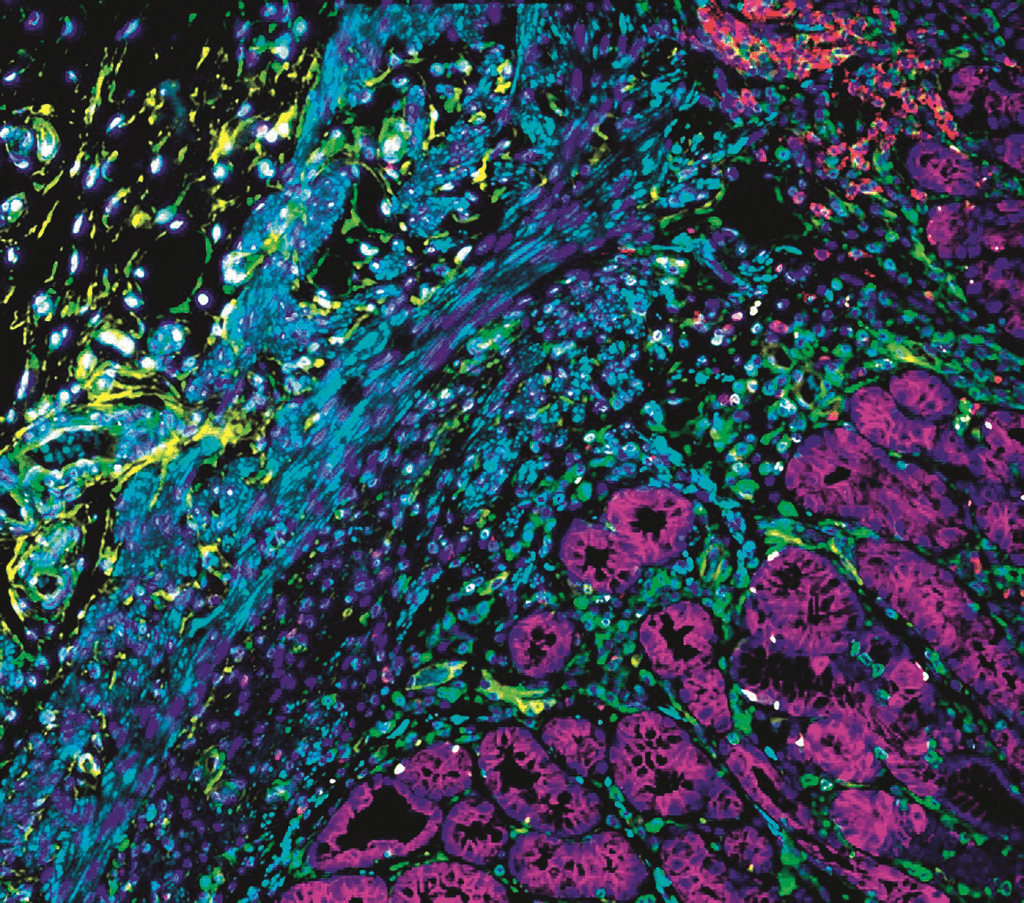
In a fluorescent application, researchers used VectaPlex to visualize tumor microenvironments (TMEs) in mouse brain sections after laser interstitial thermal therapy, a minimally invasive treatment for brain tumors [1]. From one section, the team characterized microglial activation, macrophage infiltration, reactive astrocytes, neuronal injury, myelin fragmentation, and vascular remodeling without a dedicated multiplexing platform.
Tumor sections are a demanding application for fluorescent staining. Red blood cells, collagen-rich stroma, necrotic regions, and aldehyde fixation all add autofluorescence that can mask dim markers, including exhaustion and checkpoint targets. TrueVIEW® Autofluorescence Quenching Kits reduce these non-lipofuscin sources of background, and VECTASHIELD® Antifade Mounting Media help retain signal across long imaging sessions and whole-slide scans.
For brightfield work, ImmPRESS® polymer detection is biotin-free, which avoids background from endogenous biotin in tissues such as kidney and liver.
Glycosylation adds a regulatory layer that protein markers alone do not capture. Wieboldt et al. used fluorescein-conjugated SNA and biotinylated MAL II lectins to profile sialylation on myeloid-derived suppressor cells (MDSCs) from lung cancer patients. Patient MDSCs carried more sialic acid and expressed more inhibitory Siglec receptors than healthy donor cells, and blocking the sialoglycan-Siglec interaction reduced CCL2 production and enhanced T cell proliferation [2]. Findings like these support glyco-immune checkpoints as potential therapeutic targets.
Lectin staining can be added to IHC and IF protocols, and specificity is the main consideration when interpreting results. Vector Laboratories lectins are validated by the National Center for Functional Glycomics (NCFG) for specificity and reproducibility, draw on more than 50 years of glycobiology experience, and are cited in more than 25,000 peer-reviewed publications. Blocking also needs care: common protein blockers such as BSA and serum carry glycoproteins to which lectins can bind. Carbo-Free™ Blocking Solution is formulated without glycoproteins to reduce nonspecific background.
For protein targets, recombinant antibodies from Absolute Antibody, a Vector Laboratories brand, offer a defined sequence and consistent performance across lots, which supports longitudinal and multi-site studies.
Vector Laboratories has been supplying researchers with trusted reagents for 50 years. Their tools for multiplex IHC, IF, lectin histochemistry, signal amplification, autofluorescence reduction, and recombinant antibodies are available through Bio-Connect for researchers in the Benelux and across Europe.
Need help selecting reagents for your tumor microenvironment panel, optimizing sequential staining, or adding glycan detection to your workflow? Contact your Bio-Connect account manager or reach out to our technical support team for product advice, availability, documentation, or help building a suitable staining strategy.


Antibodies | Glycobiology | Immunodetection Reagents | Specialty Chemicals | Mounting Medium | Staining
We gladly support you by keeping you updated on our latest products and developments