Looking for a smarter way to work with monoclonal antibodies, recombinant proteins, extracellular vesicles/exosomes, complex 3D cell culture models and antimicrobial PK/PD studies without having to run five different systems?
FiberCell Systems unites these applications on a single 3D hollow fiber perfusion platform. This platform combines high density cell culture with the CDM HD chemically defined medium and the well established Hollow Fiber Infection Model (HFIM) for antimicrobial PK/PD.
On its own website, FiberCell describes its 3D hollow fiber bioreactors as “the most in vivo like way to culture cells”
At Bio Connect, we supply the full FiberCell portfolio in Europe, from bioreactors and cartridges to media and manuals. This article gives you a clear, easy overview of everything you can do with FiberCell, and links you directly to the in depth resources already available on our website.
Standard 2D flasks and low density suspension cultures are built around the lab bench, not around the biology. Conditions fluctuate every time you handle cultures, and you often end up with variable quality and higher background from host cell proteins, DNA and other contaminants in the harvested supernatant.
FiberCell Systems has designed a closed, 3D hollow fiber bioreactor that:
These 3D perfusion hollow fiber bioreactors transcend simple “cell centric” thinking and move towards histocentric, tissue like culture conditions. This histocentric approach underpins the entire FiberCell portfolio: production, 3D models, exosomes, and infection models all use the same core technology.
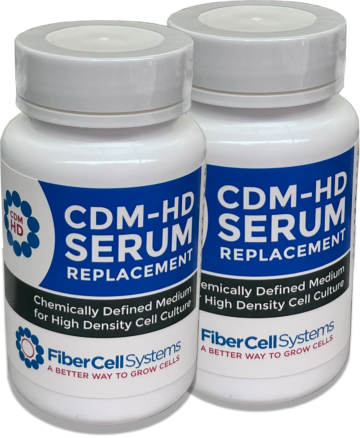
At the center of many applications is CDM HD, a chemically defined, protein and animal component–free serum replacement specifically optimised for high density hollow fiber culture.
Because CDM HD contains no medium derived proteins, your secreted product is often the only significant protein in the harvest. That means:
CDM HD includes customised amino acids and metabolites, vitamins, cofactors, trace elements, micronutrients, extra buffering capacity, recombinant growth factors and carbohydrates (including 800 mg/L glucose), while excluding proteins, hydrolysates, animal derived components, undefined reagents, steroid hormones, phenol red and detergents.
You reconstitute one bottle to 1 L, sterile filter, and use it at 10% with your basal medium. It ships at ambient temperature, is stored at 4°C and has a three year shelf life.
Read more in our dedicated article:
FiberCell’s 3D hollow fiber bioreactors are an excellent fit for 50 mg up to gram scale monoclonal antibody production from hybridomas. In a compact, 3D perfusion system, hybridoma cells grow at very high density in an in vivo like microenvironment.
In combination with CDM HD, this setup:
This makes FiberCell highly attractive for labs that want to move beyond flasks and spinners to a more productive and cleaner antibody production workflow.
Discover more details in:
Mammalian expression of recombinant proteins often suffers from low titers and inconsistent post translational modifications. FiberCell’s hollow fiber bioreactors tackle both issues:
You can produce tens of milligrams up to gram scale quantities of recombinant protein from mammalian expression systems in a footprint that fits into a standard cell culture lab.
Beyond pure production, FiberCell’s hollow fiber bioreactors provide a versatile platform for 3D co cultures and long term models that better reflect in vivo physiology.
Cells grow at high density on a porous support inside the fibers. The molecular weight cut off of the fibers allows exchange of nutrients and waste while concentrating secreted factors. This supports:
Example applications include:
Parasites such as Cryptosporidium, Babesia bigmena and malaria sporozoites have also been cultured in these systems, showcasing their value in parasitology and infection research.
Exosomes and extracellular vesicles (EVs) are central to many regenerative medicine and immunology projects, but production at scale and without serum contamination is difficult.
FiberCell’s 3D hollow fiber bioreactors offer:
This technology has been applied to mesenchymal stem cells, human amniotic fluid stem cells, 293 cells, primary cancer cell lines and natural killer cells, including work on NK cell derived EVs for cancer immunotherapy.
Read more in:
In antimicrobial drug development and AMR research, FiberCell’s Hollow Fiber Infection Model (HFIM) is a powerful in vitro system based on the same hollow fiber technology.
HFIM uses hollow fiber cartridges in a two compartment setup that:
Because the system is closed and bio‑safe, it is suitable for highly pathogenic and drug‑resistant organisms. At the same time, it can significantly reduce the need for animal testing while modelling absorption, excretion and metabolic profiles that closely mimic human half‑life.
Learn more in our two focused articles:
FiberCell describes its hollow fiber bioreactors as histocentric: designed around tissue like physiology rather than operator convenience. In practice this gives you:
Maintenance can drop to around 15 minutes a day, while secreted products are often 10–100x more concentrated with lower host cell protein and DNA contamination. Fiber geometry mimics the mammalian capillary bed, enabling true 3D perfusion and co cultivation.
To make implementation easier, FiberCell has compiled a Cell Culture Manual packed with updated protocols for:
It distils decades of 3D hollow fiber expertise into a single guide, ideal as both an introduction and an optimisation resource.
This overview article is your entry point to the entire FiberCell Systems portfolio:
From here, you can click through to each individual topic for technical details, downloads and protocols, and easily see how FiberCell Systems can fit into your cell culture, bioproduction or AMR workflows.



3D Cell Culture | Hollow Fiber Bioreactor | Serum Replacement | Production of Secreted Products (antibodies, proteins, EVs)
We gladly support you by keeping you updated on our latest products and developments