Animal-free, xeno-free and recombinant solutions for more ethical and reproducible life science research.
Last updated: September 2026
This page is updated regularly as new suppliers, product lines and innovations become available in our portfolio.
At Bio-Connect, we continuously expand our portfolio with animal-friendly, animal-free, xeno-free and animal component-free solutions for life science research. This living overview brings together suppliers and product categories that help researchers reduce animal-derived components, improve reproducibility and move towards more ethical, defined research models.
From animal component-free cell culture media and recombinant proteins to synthetic 3D matrices, recombinant antibodies and advanced in vitro systems, Bio-Connect supports researchers who want to make their workflows more reliable, transparent and animal-friendly.
Animal-free generally means that a product contains no components of animal origin, although the exact scope of the claim may vary by product and supplier. Because claims can differ per supplier, product type and formulation, it is important to look at product-specific information.
Animal-free products are designed to avoid animal-derived materials or animal-based production steps, depending on the specific product claim. Examples include certain recombinant proteins, recombinant antibodies, synthetic matrices and recombinant alternatives to animal-derived reagents.
Animal component-free products do not contain animal-derived components in the final formulation. This term is often used for cell culture media, supplements and workflow reagents.
Xeno-free products are designed to avoid components from non-human animal origin. In human cell culture, this usually means avoiding materials from other species, while human-derived or recombinant components may still be present depending on the product. This is especially relevant in stem cell research, translational research and cell therapy-related workflows.
Animal-friendly innovations include products and technologies that help reduce, replace or refine the use of animal-derived materials or animal models. This can include defined in vitro models, human-relevant 3D culture systems, recombinant reagents and technologies that support alternatives to animal testing.

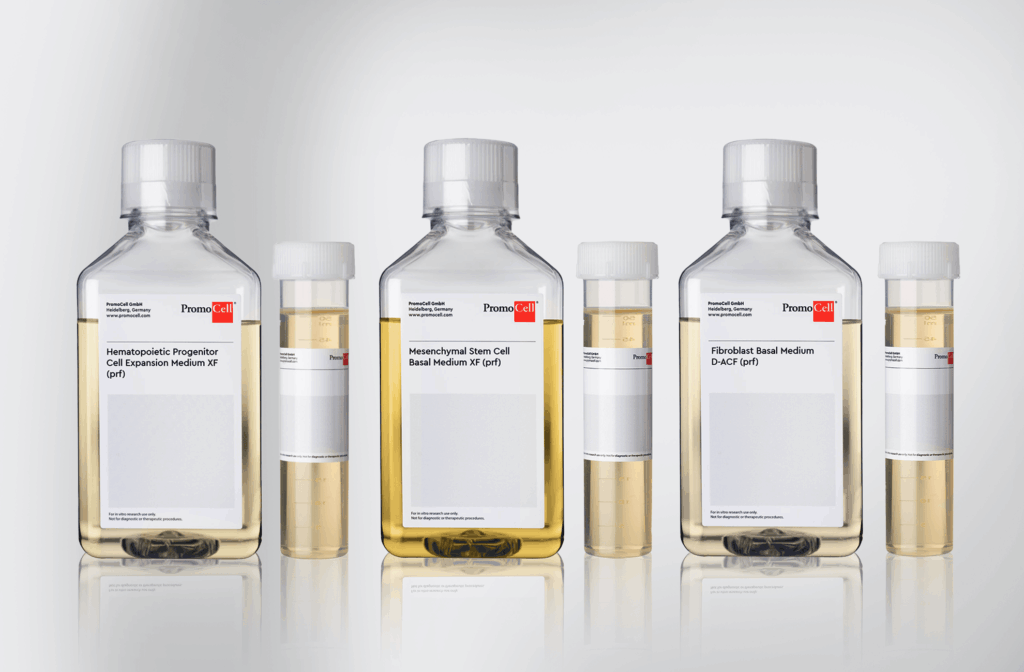
PromoCell‘s portfolio includes animal component-free, xeno-free, serum-free and chemically defined media designed to support more controlled and reproducible culture conditions.
Researchers working with human primary cells, stem cells or translational cell culture models often need defined culture conditions with less variability. In those workflows, depending on the formulation, PromoCell’s xeno-free and animal component-free media can help reduce or avoid undefined or animal-derived components, while supporting more standardized cell culture.
Relevant product areas
Related reading

FiberCell takes a different route within animal-friendly research. Rather than focusing only on animal-free formulations, its hollow fiber bioreactor systems enable long-term, high-density and more physiologically relevant in vitro culture.
These systems can support advanced in vitro models and may help researchers reduce reliance on animal-based systems in certain applications. Depending on the experimental setup, application and product selection, FiberCell workflows can also be combined with serum-free or animal component-free approaches.
Relevant product areas
Why this matters
Advanced in vitro systems can contribute to the reduction and replacement of animal-based experiments by enabling more controlled, scalable and human-relevant culture models.
The suppliers below support animal-friendly research workflows through animal-free, xeno-free, animal component-free, recombinant or defined solutions. Some have explicitly animal-free product lines, while others include recombinant or defined alternatives within a broader portfolio.
| Supplier | Animal-friendly solution | Product area |
|---|---|---|
| PromoCell | Animal component-free, xeno-free, serum-free and chemically defined media | Cell culture media |
| FiberCell | Hollow fiber bioreactor systems for advanced in vitro workflows | In vitro models and bioreactors |
| BioVendor | Recombinant Factor C endotoxin detection as an alternative to traditional LAL testing | Endotoxin testing |
| Basic Pharma | Recombinant human serum albumin | Recombinant proteins |
| Absolute Antibody / Vector Laboratories | Recombinant antibodies produced using defined recombinant technologies | Recombinant antibodies |
| LS Bio | Recombinant proteins, including plant-based expression options | Recombinant proteins |
| MedChemExpress | Recombinant proteins, including animal-free and GMP-grade protein options | Recombinant proteins |
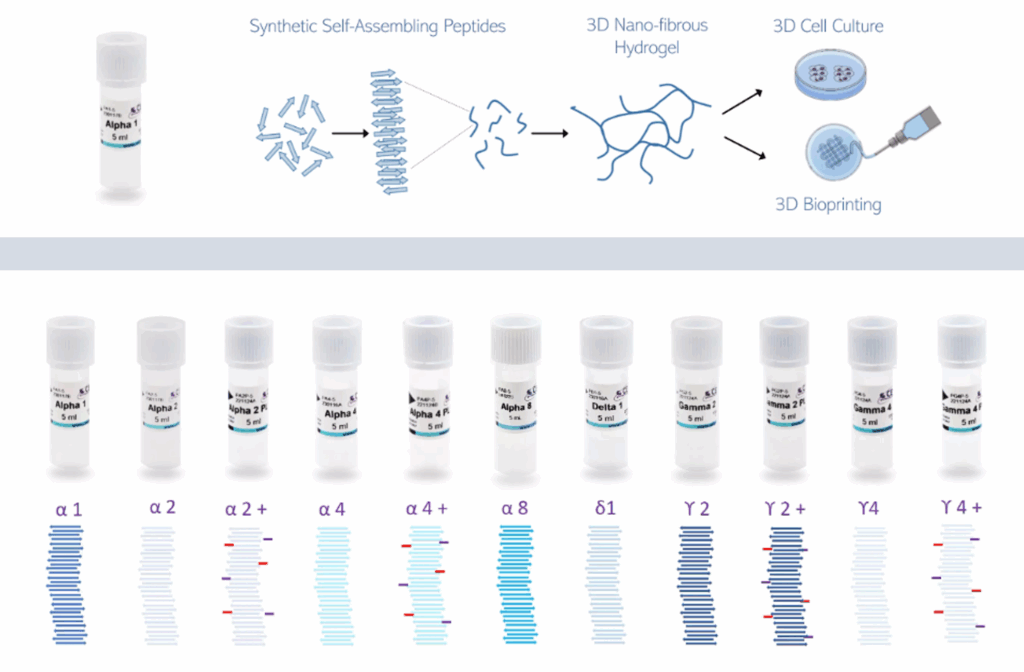
| Cell Guidance Systems | Synthetic PeptiGel hydrogels | 3D cell culture matrices |
| Bioss | Animal-free monoclonal antibody options within a broader antibody portfolio | Recombinant antibodies |
| AdipoGen Life Sciences | Cytokines and B cell expansion reagents produced under animal-free or animal component-free conditions | Cytokines and immune cell research |
| Sino Biological | Recombinant cytokines and growth factors, including animal-free options | Cytokines and growth factors |
| Proliant Health & Biologicals | Recombinant Human Albumin | Recombinant albumin |
| CANDOR Bioscience | Selected animal-free and protein-free stabilizers, blockers and assay diluents | Immunoassays |
| Core Biogenesis | Animal-free recombinant growth factors and cytokines | Recombinant proteins |
| BioLamina | Defined and xeno-free laminin-based matrices | Cell culture matrices |
| Metatissue | Human-derived, xeno-free biomaterials | 3D culture and tissue models |
| Celprogen | Xeno-free media and 3D culture systems | Cell culture and organ culture |
| Provis Biolabs | Selected animal-origin-free recombinant proteins and enzymes | Recombinant proteins and enzymes |
Defined media are an important part of animal-friendly cell culture. Traditional cell culture workflows often rely on animal-derived components such as fetal bovine serum or other undefined supplements. These materials can introduce batch-to-batch variability and may complicate reproducibility, standardization and translational relevance.
Animal component-free, xeno-free and serum-free media can help researchers create more controlled culture conditions. This is especially valuable in human primary cell culture, stem cell research, regenerative medicine, immunology and cell therapy-related workflows.
Relevant Bio-Connect suppliers include:




Within human cell culture applications, PromoCell is a strong choice for laboratories looking to reduce animal-derived components. Its portfolio includes animal component-free, xeno-free, serum-free and chemically defined media that help researchers work with more defined culture conditions.
For teams building more representative in vitro models, Celprogen brings together cell culture systems, xeno-free media options, stem cells, normal cells, organ culture models and 3D culture systems. This makes the portfolio relevant for researchers who need more defined or human-relevant culture setups.
BioLamina’s defined and xeno-free laminin-based matrices are especially relevant for stem cell culture, pluripotent stem cells and human cell culture workflows. They can help researchers create controlled extracellular matrix conditions without relying on undefined animal-derived matrices.
Recombinant proteins, cytokines and growth factors can help researchers reduce reliance on animal-derived materials while improving consistency and reproducibility. Recombinant production can provide more defined reagents and support workflows where batch consistency is critical.
Animal-free recombinant proteins are particularly relevant in:
Relevant Bio-Connect suppliers include:






Basic Pharma’s recombinant human serum albumin is an animal-free alternative to plasma-derived human serum albumin. In cell culture, formulation, stabilization and bioprocessing applications, recombinant albumin can support more defined and consistent workflows.
Related reading:
Sino Biological has a broad portfolio of recombinant proteins, cytokines and growth factors. Within that portfolio, specific animal-free cytokine and growth factor products are available for stem cell culture and cell therapy-related research workflows.
Because not every product line carries the same claim, Sino Biological is best positioned product-specifically rather than as an entirely animal-free supplier.
Related reading:
Researchers looking for defined and reproducible protein reagents will find a broad recombinant protein portfolio at MedChemExpress. This includes animal-free recombinant protein options for cell biology, immunology and drug discovery workflows.
Related reading:
Core Biogenesis focuses on animal component-free recombinant growth factors and cytokines produced using a plant-based expression platform. These products fit well in defined cell culture and advanced research workflows where consistency and animal-free production are important.
LifeSpan BioSciences / LSBio is relevant for researchers working with defined proteins in disease research, biomarker discovery and cell biology. Its recombinant protein range includes selected animal-free protein options within a broader research portfolio.
For animal-free recombinant albumin specifically, Proliant Health & Biologicals is a relevant addition. Its AlbuFree™ DX recombinant human albumin provides an animal-free recombinant option within Proliant’s broader protein portfolio.
Because the Proliant portfolio also includes animal-derived products, the animal-friendly relevance should be linked specifically to recombinant albumin rather than to the full supplier range.
Related reading:
In immunology and immune cell research, AdipoGen Life Sciences adds relevant cytokines and cell expansion reagents to the animal-friendly portfolio. Its InVivoKines and B-Xpander product lines include products produced under animal-free or animal component-free conditions.
Related reading:
Provis Biolabs is relevant for researchers looking for animal-origin-free recombinant proteins and enzymes. Its portfolio supports more defined research workflows in areas such as cell biology, assay development and biotechnology applications. Because product claims can differ by product, the animal-origin-free status should be checked for each specific reagent.
Related reading:
Recombinant antibodies are produced from defined genetic sequences, which can improve reproducibility and reduce the need for traditional animal-derived antibody production methods. For researchers, sequence-defined recombinant antibodies can offer improved batch-to-batch consistency, long-term availability and broader validation and engineering options.
Animal-free or animal-friendly antibody technologies are relevant in:
Relevant Bio-Connect suppliers include:


Absolute Antibody, part of Vector Laboratories, specializes in recombinant antibody technology. By using defined antibody sequences and controlled recombinant production, these reagents can support reproducibility, batch-to-batch consistency and long-term availability. Selected products or production workflows may also help reduce reliance on traditional animal-based antibody production methods, depending on how the antibody was developed and produced.
Related reading:
Bioss offers KD-validated recombinant antibodies that are produced using animal-free methods. These antibodies are available with knockdown and wild-type cell lysates as validation controls, supporting antibody specificity and reproducible performance.
Related reading:
Three-dimensional cell culture can help researchers develop more physiologically relevant in vitro models. Traditional 3D culture often uses animal-derived matrices, which can vary between batches and may contain undefined components.
Synthetic, defined and xeno-free matrices offer a more controlled alternative. These products can help researchers build reproducible 3D models while reducing reliance on animal-derived materials.
Relevant Bio-Connect suppliers include:


For defined extracellular matrix conditions, BioLamina’s xeno-free laminin-based matrices are particularly useful in human cell culture and stem cell workflows. They are a strong fit for pluripotent stem cells and other models where consistency is essential.
Celprogen combines 3D culture systems, organ culture models, stem cells, normal cells and xeno-free media options. This makes the portfolio useful for researchers who want to build more representative in vitro models.
Metatissue brings human-derived, xeno-free biomaterials into the 3D culture space. Its hydrogels and sponge-based 3D biomaterials are relevant for researchers developing more human-relevant in vitro models and exploring alternatives to animal-based testing.
Cell Guidance Systems is the supplier behind PeptiGel, a synthetic peptide hydrogel for 3D cell culture. As a synthetic matrix, PeptiGel gives researchers an alternative to animal-derived extracellular matrices and supports more defined 3D culture conditions.
Related reading:
Endotoxin testing is essential in many research, pharmaceutical and biotechnology workflows. Traditional LAL testing depends on lysate derived from horseshoe crab blood. Recombinant Factor C technology offers an animal-free alternative for endotoxin detection.
With recombinant Factor C endotoxin detection, BioVendor supports laboratories that want to move away from traditional LAL-based testing. This animal-free approach helps maintain reliable endotoxin detection while reducing reliance on animal-derived lysate.
Related reading:
Animal-free research is not limited to cell culture and protein production. Immunoassays and diagnostic research workflows can also benefit from animal-free or protein-free reagents, including stabilizers, blockers and assay diluents.
CANDOR Bioscience is relevant for researchers and diagnostic developers who want to reduce undefined or animal-derived assay components. Its portfolio includes selected animal-free and protein-free stabilizers, blockers and assay diluents that support more defined immunoassay workflows. Because animal-free and protein-free are separate product claims, the status should be checked for each specific product.
Relevant product areas:
Animal-friendly research is not only about removing animal-derived components from reagents. It is also about developing better in vitro models that can reduce, refine or replace animal-based experiments.
Advanced human cell culture models, 3D culture systems, organoid workflows, bioreactors and human-derived biomaterials can help researchers create more relevant models for human biology and disease. These systems may support more predictive research while contributing to the reduction of animal testing.
Relevant Bio-Connect suppliers include:
Selecting the right animal-free or animal-friendly product depends on your application, regulatory expectations and required level of definition.
When evaluating products, consider the following questions:
Because product claims differ per supplier and product line, Bio-Connect recommends checking the specific product documentation before implementation.
Animal-free generally means that a product contains no components of animal origin, although the exact scope of the claim may vary by product and supplier. In human cell culture, xeno-free means that components of non-human animal origin are avoided, while human-derived components may still be present. Xeno-free conditions are especially relevant for human cell culture, stem cell research and translational workflows.
Animal component-free media are cell culture media formulated without components of animal origin. They can help reduce the variability and safety concerns associated with animal-derived materials, but they are not necessarily chemically defined. Because definitions can vary between suppliers, the product-specific documentation should be reviewed.
Recombinant proteins can offer improved batch-to-batch consistency, more controlled production and better reproducibility while reducing reliance on proteins extracted from animal tissues or fluids. They are especially useful in cell culture, bioprocessing, immunology, stem cell research and assay development. However, recombinant proteins are not automatically animal-free, so product-specific production information should be reviewed.
Some recombinant antibodies are produced using animal-free technologies, but recombinant does not automatically mean animal-free. This depends on how the antibody was developed and on the expression system, culture media and other materials used during production. Recombinant antibodies are generally sequence-defined and can offer improved reproducibility and batch-to-batch consistency compared with traditional animal-derived antibodies.
Bio-Connect offers product-specific animal-free or animal-origin-free options from suppliers such as MedChemExpress, Provis Biolabs, Cell Guidance Systems, BioVendor, AdipoGen Life Sciences, Core Biogenesis and CANDOR Bioscience. Additional suppliers, including PromoCell, Sino Biological, BioLamina and Metatissue, offer selected animal-free, animal component-free, defined or xeno-free solutions.
Yes, animal-free, recombinant, synthetic or chemically defined products can help reduce variability caused by animal-derived or undefined materials. This can improve reproducibility, standardization and workflow control.
Advanced in vitro models, such as 3D culture systems, human-derived biomaterials, organoid models and bioreactor-based culture systems, can provide more human-relevant research models. In some applications, these systems may help reduce or replace animal-based experiments.
We gladly support you by keeping you updated on our latest products and developments